By Kelvin Moreno, Moreno Ranches
In today’s cattle industry, tremendous emphasis is placed on growth, performance, carcass merit, and show-ring success. While all of these traits have value, one of the most important drivers of long-term profitability often receives far less attention:
Cow longevity.
A female that remains productive for ten or more years will almost always generate more profit than a female that leaves the herd after producing only one or two calves.
Research from universities, beef improvement organizations, and commercial cattle operations continues to reinforce a simple truth:
The most profitable cows are those that stay in production the longest while consistently raising quality calves.
For tropical cattle producers throughout the Americas, this principle is especially important—and it is one of the reasons Brahman cattle continue to dominate in challenging environments.
The Economics of a Long-Lived Cow
Every replacement female represents a significant investment.
Before she ever produces her first calf, a rancher has already invested in:
- Development costs
- Feed and pasture
- Health programs
- Breeding expenses
- Labor and management
Research utilized by the Beef Improvement Federation indicates that a cow generally must remain productive through approximately six years of age before she fully recovers her development and maintenance costs. This concept is the foundation of modern stayability measurements used throughout the beef industry.
Recent industry analyses also show that cows culled before reaching maturity often fail to generate enough revenue to justify their development costs.
In practical terms:
- A cow producing 2 calves is expensive.
- A cow producing 8 calves is profitable.
- A cow producing 10–12 calves becomes a cornerstone of the herd.
That difference is where longevity creates wealth.
What Texas A&M Research Shows
Researchers and economists at Texas A&M AgriLife have repeatedly emphasized the financial value of replacement females that remain productive for many years.
Texas A&M publications note that a female’s genetics can influence herd profitability for 8 to 14 years, making replacement female selection one of the most important decisions a rancher makes.
Texas A&M economists have further estimated that adding just two to three additional years of productive life to replacement females can create $3,000 to $6,000 in additional value per cow over her lifetime.
Those numbers become staggering when multiplied across an entire cow herd.
For a 200-cow operation, even modest improvements in longevity can mean hundreds of thousands of dollars in additional lifetime productivity.
What University of Florida Research Demonstrates
The University of Florida has long been one of the leading institutions studying Brahman cattle under subtropical conditions.
The UF Brahman herd has implemented extensive performance recording and whole-herd reporting systems to identify females with superior maternal performance and longevity. UF recently recognized its first Elite Maternal Merit Brahman cow while continuing to increase the number of cows qualifying for maternal merit designations.
Research conducted through the University of Florida’s Range Cattle Research and Education Center has also demonstrated the remarkable adaptability of Brahman cattle under Florida’s challenging environmental conditions.
Studies comparing Brahman and Angus cattle showed Brahman females maintain activity levels during hotter portions of the day due to their superior heat tolerance and physiological adaptation to tropical environments.
Those adaptive advantages are not merely comfort traits.
They contribute directly to:
- Reproductive efficiency
- Longevity
- Fertility
- Lifetime productivity
The Tropical Advantage
The Brahman breed was not developed in a controlled environment.
It was developed through generations of selection under some of the harshest cattle-producing conditions in the world.
Throughout:
- Brazil
- Paraguay
- Colombia
- Nicaragua
- Mexico
- Central America
- South Texas
- Florida
Brahman cattle were selected for one purpose:
Survive. Reproduce. Remain productive.
For decades, ranchers across the tropics have retained females that could:
- Rebreed every year
- Raise a heavy calf
- Maintain body condition
- Walk long distances
- Handle parasites
- Endure heat and humidity
The result is a breed uniquely designed for longevity.
Unlike many production systems where cows are expected to remain productive for only a few years, it is common throughout South and Central America to find Brahman females remaining productive well into their teens.
Those cattle are not exceptions.
They are the product of generations of selection pressure focused on functionality rather than short-term performance.
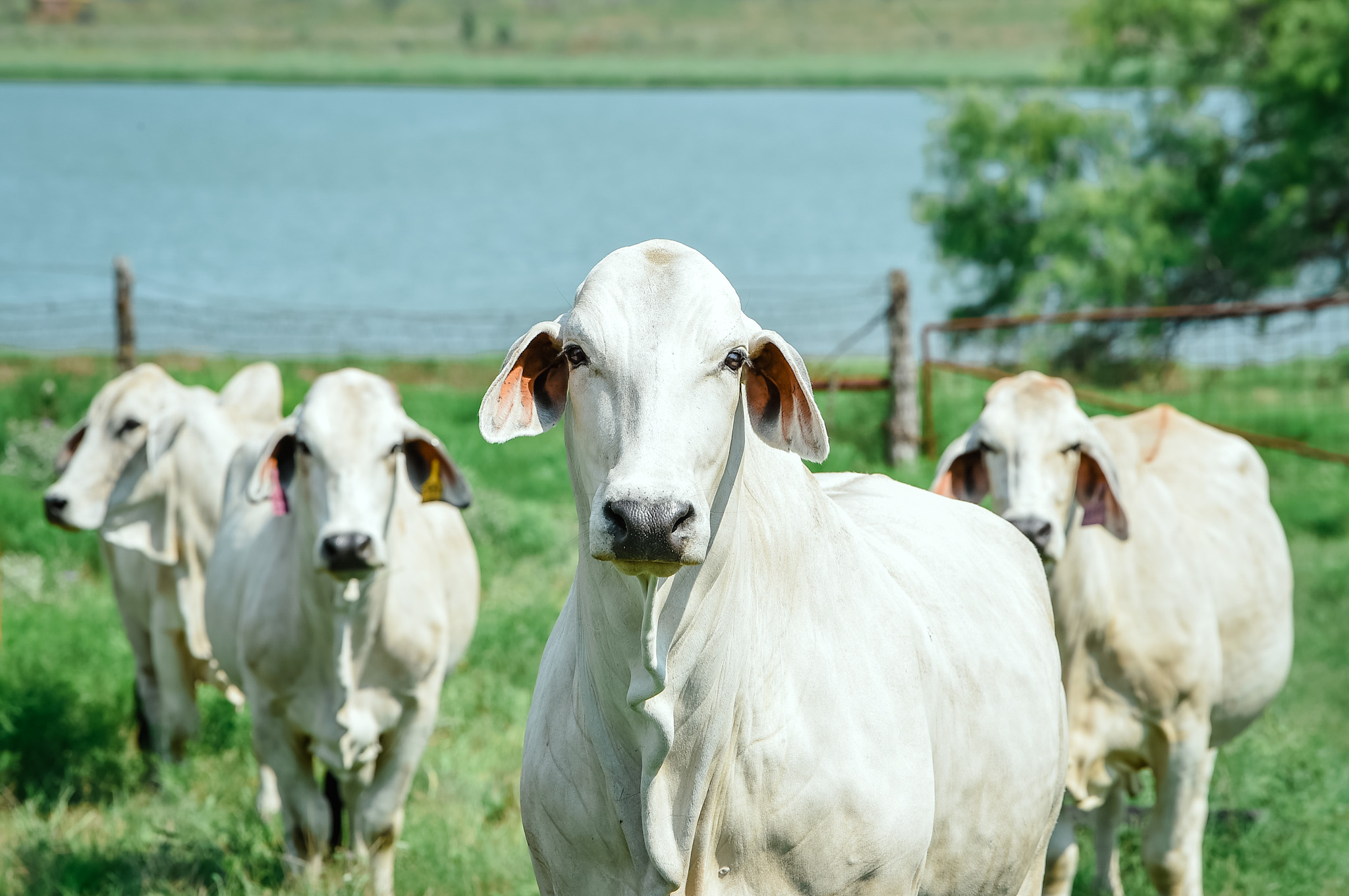
Why Cow Families Matter
At Moreno Ranches, we believe longevity is inherited through cow families.
While EPDs and genomic tools continue to improve, some of the most valuable information still comes from studying maternal lines that have consistently produced generation after generation of productive females.
The foundation cow families behind our program have been selected for:
- Fertility
- Structural correctness
- Functional udders
- Maternal instinct
- Adaptability
- Stayability
These are the traits that keep cows in production.
They are also the traits that create sustainable profitability for commercial producers.
Our most influential donor females are not simply elite because of what they have accomplished individually.
They are elite because they have consistently produced daughters and granddaughters that remain productive for years.
Stayability: The Future of Beef Genetics
Today, genetic evaluation systems increasingly measure what the industry calls stayability—the probability that a female remains in production long enough to reach profitability.
Research across multiple universities has shown that females that conceive early, calve early, and maintain reproductive efficiency throughout life remain in the herd longer and ultimately produce more calves.
Modern genomic tools are now allowing producers to identify cattle with a greater genetic predisposition for longevity before they ever produce their first calf.
The industry is finally beginning to measure scientifically what practical cattlemen have known for generations:
The best cows are the ones that simply stay and work.
The Moreno Ranches Philosophy
At Moreno Ranches, we are committed to building Brahman genetics that excel not only today, but for generations to come.
Our breeding decisions are centered around producing cattle that can thrive in the environments where commercial producers operate every day.
We believe the ideal Brahman female should:
- Breed back consistently
- Raise a quality calf annually
- Maintain structural soundness
- Adapt to tropical and subtropical conditions
- Remain productive for a decade or more
Those are the traits that built the Brahman breed throughout the Americas.
Those are the traits that continue to drive profitability today.
And those are the traits that will define the future of sustainable beef production.
Because at the end of the day, the most profitable cow is not always the biggest, the heaviest, or the most decorated.
The most profitable cow is the one still producing a great calf ten years from now.
That is longevity.
That is the Brahman advantage.
And that is the foundation upon which Moreno Ranches continues to build its program.
Kelvin Moreno
CEO, Moreno Ranches, Inc.
Preserving maternal excellence. Building Brahman genetics for the Americas.